
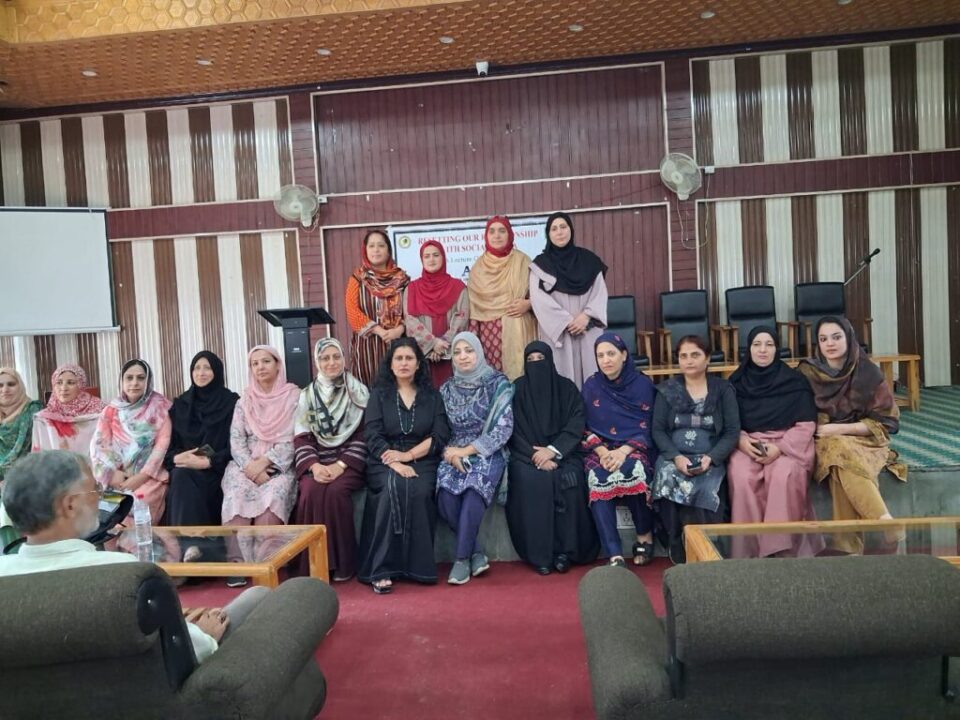
On a late August morning in Srinagar, rows of students at SP Model Higher Secondary School leaned forward in their chairs as the conversation shifted from likes and shares to attention spans and lost hours.
The session, titled “Resetting Our Relationship with Social Media,” was an attempt to bring digital wellness into the lives of Kashmiri teenagers who are spending more time online than ever before.
The program was hosted by ACT, a Srinagar-based nonprofit, and led by Dr. Seema Sangra, a professor from Amity University Dubai.
With the ease of a teacher used to balancing research with real-world questions, Dr. Seema explained how social media platforms work to capture attention and shape behaviour.
“With every good aspect, there also comes a harmful side. Hence, one must remain alert and use these tools wisely,” she told the room, adding that free platforms often profit by turning users into the product.
To make the lesson sharper, she screened short videos made by Amity University’s Digital Media students.
The clips portrayed the ways scrolling can chip away at concentration, disrupt studies, and blur priorities. Students nodded as scenes of wasted hours and missed deadlines played out on screen.
The message was direct: technology is powerful, but so is the choice of how to use it.
Mustaaque Ali Ahmed Khan, Director of ACT, said the workshop was designed to give Kashmiri youth tools to think critically about the online world.
“Our students are digital natives,” he said. “They need emotional resilience and awareness to navigate these spaces. It is a responsibility we owe them.”
The program was interactive, with students asking about privacy, screen time, and whether it was possible to balance social media with academic goals. Teachers, who have often struggled to hold attention in classrooms flooded by smartphones, welcomed the effort.
