SKUAST-K aims to boost foreign student ratio, compete globally: VC Prof Ganai
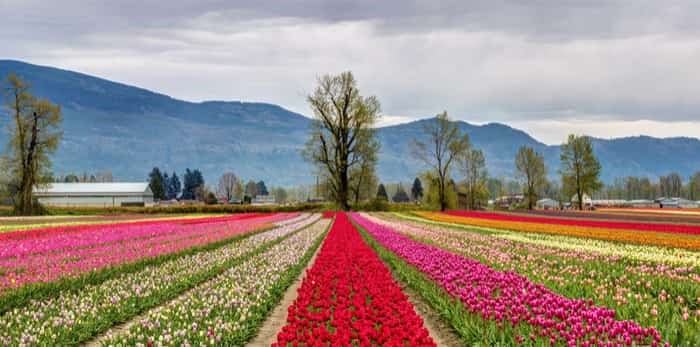
At Sher-e-Kashmir University of Agricultural Sciences and Technology, Kashmir (SKUAST-K), young researchers are quietly working on what could become one of the Valley’s most exciting floricultural breakthroughs, the possibility of keeping tulips, the crown of Kashmir’s spring, blooming throughout the year.
Among them is Youna, a bright young researcher from Tamil Nadu, who has spent the last several months attempting what many thought impossible: growing tulips beyond their traditional blooming window of late March to early April. Her goal is to create a new kind of floral economy for Kashmir, one that could see tulips blooming through the cold of winter, just in time for New Year’s Eve and Christmas celebrations.
“I’m testing off-season production by manipulating the temperature and light conditions to stimulate flowering at different times,” Youna explains with enthusiasm. “By providing the bulbs with various treatments over a period of weeks, like 14 weeks, 16 weeks, and so on, I hope to achieve year-round blooming. Right now, I’ve succeeded in getting the bulbs to sprout and root, and my first trial should be complete by December.”
The project is still in its early stages, but the implications are enormous. Kashmir’s tulips, which are usually seen only in spring, could potentially become a year-round attraction, not only enhancing the tourism sector but also opening new avenues for local floriculture exports.
Youna credits the university’s cutting-edge facilities and supportive environment for making such innovative research possible. “SKUAST-K offers a great platform for innovation,” she says. “The access to high-end equipment and guidance from the faculty is unparalleled. This atmosphere is perfect for experimentation.”
Alongside Youna, another young researcher, Seerat Fatima from Bhaderwah, has been exploring new ways to give flowers a commercial edge. Recently graduated with a Master’s in Floriculture, Seerat has been working on “tinting” flowers, changing the colour of blooms like roses to meet specific market demands. By using both synthetic and natural colourants, Seerat has been able to produce vibrant custom shades, including new hues for white roses.
“This is a completely new concept,” Seerat explains. “There’s huge potential here in the commercial market. If we can provide roses in unique shades, tailored to consumer preferences, we can open up new opportunities for the floral industry.”
Together, these projects represent just a glimpse of the growing research culture at SKUAST-K, which is rapidly gaining recognition on national and international platforms. The university, which has recently risen to become the third-best agricultural university in India, is focused on breaking new ground in research and innovation.
Professor Nazir Ahmad Ganai, Vice Chancellor of SKUAST-K, says the university’s ambition is clear: “Our goal is to make SKUAST-K the number one agricultural university in the country. Over the years, we’ve seen remarkable growth in student intake, from 2,000 to 6,000 students, and an increasing number of international students. We now have 11 international students, and we hope to attract more. But for all this to happen, peace is essential. Our focus is not just on academic excellence but on securing a place for SKUAST-K in global university rankings.”
The passion and drive of young researchers like Youna and Seerat are helping to shape this vision. And as the university continues to develop and grow, Kashmir’s horticultural landscape could soon witness a revolution. The tulips that once symbolised the fleeting beauty of spring might soon be part of Kashmir’s year-round identity, bringing the Valley’s natural charm to the world’s doorsteps at any time of the year.
If Youna’s work proves successful, Kashmir might soon be known not only for its tulips in spring but for its ability to cultivate them even in the coldest months, making them available for export, tourism, and even local celebrations year-round. For Kashmir, which has long been known for its transient beauty, this breakthrough in floriculture could represent a new chapter of resilience and innovation.
