In some of India’s most remote and geographically challenging regions, a classroom can represent far more than a place where children study. It can be a gateway to opportunity, a source of confidence and, for an entire community, a sign of hope for the future. This is the larger story emerging from the Army Goodwill Schools (AGS) established in Jammu & Kashmir and Ladakh under the Indian Army’s community outreach efforts.
For generations of students, the journey has begun in modest classrooms close to their homes and has continued towards colleges, professional institutions, workplaces and public life across India. The stories of AGS alumni demonstrate an important truth: talent is not confined to metropolitan cities, and a child’s geographical location should not determine the scale of their aspirations.
Where the Journey Begins
For a child growing up in a remote mountain or border community, access to quality education can involve considerable challenges. Distance, difficult terrain and limited educational infrastructure can affect the opportunities available to young students.
Army Goodwill Schools have sought to address this gap by providing educational facilities closer to such communities. Over the years, these schools have become part of the educational landscape of Jammu & Kashmir and Ladakh, providing children with opportunities to learn in a structured environment and prepare for higher education and professional life. But the significance of AGS cannot be measured simply by classrooms, enrolment figures or examination results. Its deeper impact is visible in the aspirations of students.
A child who enters an AGS classroom at a young age may initially have a very local understanding of the world around them. Through education, exposure to different subjects and interaction with teachers and fellow students, that horizon gradually expands. Careers that once seemed distant—medicine, engineering, teaching, technology, administration, entrepreneurship and many others—can begin to feel attainable. That change in outlook can be one of the most important outcomes of education.
Alumni: The Real Measure of Impact
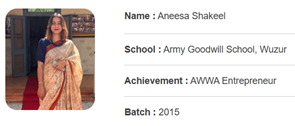
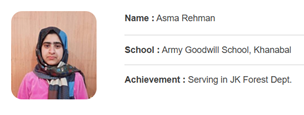
The strongest way to understand the long-term contribution of any school is to look at what happens to its students after they graduate. AGS alumni have followed different paths. Some have pursued higher education, others have entered professional careers, while some have chosen to contribute to their communities. Their destinations may differ, but their journeys share a common starting point.
For a student from a remote community, reaching a university or professional workplace can represent a significant personal and family achievement. In some cases, an alumnus may become among the first members of their family to pursue higher education or a professional career. Such achievements have an impact beyond the individual.
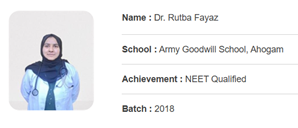
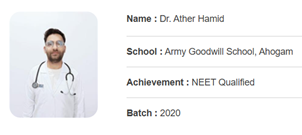
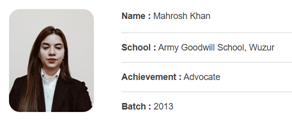
When a young person from a village becomes a professional, younger children in the same community can see a new possibility for themselves. When a girl continues her education and builds a career, she can become an example for other girls and families. When an alumnus returns home with new skills and experience, they can contribute to the development of the community that shaped them. This is how the impact of education multiplies.

Changing Aspirations, One Family at a Time
Education has a powerful influence on families. A child’s progress at school can gradually change parental expectations and encourage greater investment in education.
For families in remote areas, seeing their children progress from school to higher education can be transformative. A college degree that once appeared distant can become an achievable goal. Parents begin encouraging younger children to study further. Siblings see new career possibilities. The community begins to develop a stronger culture of education.
This generational effect is one of the most important aspects of the AGS story. A school may educate one student at a time, but its influence can extend to hundreds of families over the years. The student who benefits today can become the role model who inspires another child tomorrow. In this sense, the legacy of an Army Goodwill School is not limited to its alumni. It lives on in the aspirations of the children who follow them.
Creating Confidence Alongside Education
Academic knowledge is only one part of a child’s development. Confidence, communication skills, discipline, teamwork and the ability to interact with people beyond one’s immediate surroundings are equally important.
For students growing up in geographically isolated areas, exposure can be particularly valuable. A school environment can encourage children to participate in activities, communicate their ideas, ask questions and develop confidence in their abilities. These qualities remain useful long after a student leaves school.
An AGS alumnus entering a university in another part of India may encounter a very different environment from the one they grew up in. The confidence developed during their school years can help them adapt to new surroundings, compete with students from different backgrounds and pursue their goals. The transition from a remote classroom to a wider national environment therefore represents more than physical mobility. It can also represent social and psychological growth.
Education as Community Development
The impact of a school is often difficult to capture entirely through statistics. It can be seen in a parent who begins to take a greater interest in a child’s education. It can be seen in a student who develops the confidence to speak publicly. It can be seen when young people begin discussing careers and higher education. It can be seen when former students return to their communities as professionals and mentors.
These changes may appear small individually, but together they can gradually transform a community. Army Goodwill Schools have therefore become more than educational institutions for many families. They can serve as centres around which aspirations develop and young people begin to connect their local identity with a wider national future.
From Local Beginnings to National Contribution
India’s development story is increasingly about ensuring that opportunity reaches every region. The country has enormous human potential in its villages, mountain communities, border areas and smaller towns. The challenge is to provide young people with the education and exposure necessary to realise that potential.
The journey of AGS alumni offers an encouraging example of what can happen when educational opportunity reaches remote communities. A student may begin their journey in a classroom surrounded by mountains, but there is no reason why their ambitions should remain confined there. They can move on to universities, professional institutions and workplaces across the country. Some may eventually return home and contribute directly to their communities.
In each case, the journey demonstrates the same principle: where a person begins does not necessarily determine where they can go.
