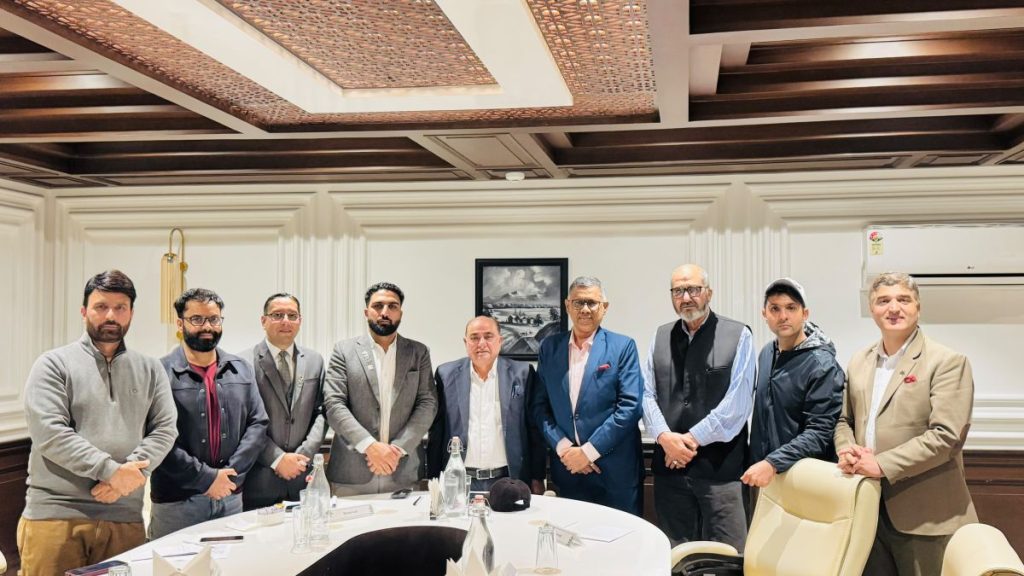
At a meeting in Srinagar on Thursday, hoteliers, adventure tourism operators, environmentalists, legal experts and academics gathered to discuss a question facing Kashmir’s tourism industry: how can the region attract visitors and generate income while protecting the landscapes that draw them here?
The meeting, held at Hotel Palm Springs in Wazir Bagh, marked the first round of consultations convened by the Ecotourism Association of Kashmir to formulate a comprehensive ecotourism policy for Jammu and Kashmir.
The association plans to hold further discussions with industry representatives, environmental specialists, academics and local communities before preparing a white paper for submission to the government.
The initiative comes as Kashmir seeks to establish a framework for tourism development that accounts for the environmental sensitivities of its mountains, water bodies and biodiversity. These natural assets underpin the region’s appeal to visitors and support livelihoods linked to hotels, adventure tourism and other hospitality businesses.
Participants argued that a structured policy could help reconcile those interests by setting out practical recommendations for responsible tourism and environmental conservation.
Mushtaq Chaya, president of the Jammu and Kashmir Hoteliers Club, chaired the meeting. Sameer Baktoo, president of the Ecotourism Association of Kashmir, convened it as part of the association’s effort to bring tourism businesses and environmental specialists into a common policy discussion.
The gathering included Vinit Chabbra, general manager of The Khyber Himalayan Resort & Spa in Gulmarg; Akib Chaya, chairman of the Hoteliers Club’s Gulmarg chapter; Rouf Tramboo, president of the Adventure Tour Operators Association; and Nasir Shah, chairman of the Jammu and Kashmir chapter of the Indian Association of Tour Operators.
Advocate Nadeem Qadri, the ecotourism association’s legal adviser, environmentalist Tausif Bhat and Riyaz Ahmad, a professor in the University of Kashmir’s Department of Tourism Studies, also attended.
Their discussions focused on building a policy that recognises the region’s ecological constraints while supporting economic opportunities for residents and the continued development of tourism.Baktoo said the industry’s future depended on linking tourism development with environmental protection. He called for greater attention to sustainable tourism practices, environmental awareness, responsible visitor behaviour and effective waste management, particularly at destinations with sensitive ecosystems.
The proposed framework would also seek to strengthen cooperation among tourism associations, hoteliers, adventure operators, environmental organisations and academic institutions. Participants said their combined expertise could help translate broad commitments to conservation into practical recommendations suited to Kashmir’s geography and environmental conditions.
That coordination will be important as the association develops its proposal. Tourism businesses understand the commercial pressures involved in attracting visitors and maintaining facilities, while environmental specialists and academics can contribute expertise on ecological protection. Legal advice could help establish how proposed safeguards might fit within existing rules and government policy.
The association has presented the initiative as a consultative exercise rather than a completed policy. Baktoo said further meetings would gather suggestions and technical input from stakeholders before the group prepares its final white paper.
Once completed, the document will go to the relevant government authorities for consideration and possible incorporation into a policy framework for ecotourism in Jammu and Kashmir.
The proposed consultations are also intended to include local communities, whose livelihoods and surroundings can be affected by tourism development. The association said their perspectives would help ensure that recommendations reflect the region’s particular environmental and geographical conditions.
The association has set the process in motion. Whether its pledge, “Love for Kashmir, Love for the Environment,” leads to meaningful change will depend on the recommendations it makes and the action the government takes.
