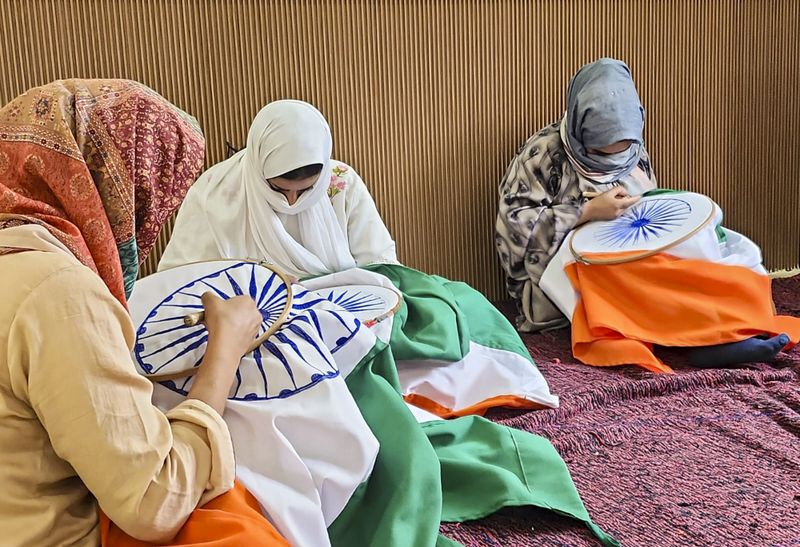
In a village close to the Line of Control in Kupwara district, 140 women have turned the craft of stitching the national flag into a source of livelihood and self-reliance, with sustained support from the Indian Army. Their initiative has grown into a recognised success story, one that even found mention in Prime Minister Narendra Modi’s Mann Ki Baat radio address.
From a Small Idea to a Cooperative Society
What began as a modest effort has since expanded into a full-fledged cooperative society known as the Flag Women of Kupwara (FLWOK). The society today runs 12 skill development centres across Kupwara, employing 140 women drawn from different parts of the district, a senior Army officer said. The women hand-stitch and crewel-embroider the Tricolour, including its Ashoka Chakra, a distinctive craftsmanship that sets their flags apart from commercially manufactured ones.
Beyond flags, the centres also produce Kashmiri hand-embroidered linen, broadening the women’s skill base and income streams.
A National Recognition
Since its inception in 2022, FLWOK has delivered more than 4,500 flags of varying sizes for national campaigns such as Har Ghar Tiranga, as well as for Independence Day and Republic Day observances. The scale and impact of their work caught wider attention, and Prime Minister Modi referenced their efforts during one of his monthly Mann Ki Baat addresses, giving the initiative a national platform.
The commercial success that followed has helped the women get listed on the Government e-Marketplace (GeM) portal, opening the door to larger and more consistent orders from government and institutional buyers.
Army’s Role and Philanthropic Support
The Indian Army has been central to the initiative, offering logistical, infrastructural and organisational support to help the venture take shape and gain visibility. Philanthropist Uma Maskai has also played a guiding role since the project’s early days, providing vision and mentorship to the women involved.
Officials say the model reflects a broader shift in how the Army engages with border communities in Kupwara, moving beyond security operations to sustained livelihood and empowerment initiatives for local residents, particularly women in remote, LoC-adjacent villages.
Recognition Beyond Kashmir
The women’s journey has also been celebrated outside Jammu and Kashmir. At the CII Young India Event in Mumbai last year, FLWOK members were felicitated by Union Minister for Culture and Tourism Gajendra Singh Shekhawat, alongside actor Jackie Shroff, in what organisers described as a “Threads of Change” moment. The women used the platform to showcase their entrepreneurial journey and leadership, drawing praise from attendees.
Looking Ahead
Encouraged by the response, the Army’s Vajr Division has indicated plans to extend support to more women-led self-help groups across Kupwara, with the broader goal of replicating the FLWOK model in other parts of the Kashmir Valley. The aim, officials say, is to help more women in border areas access training, employment and financial independence.
For the women of Kupwara, the initiative has meant more than an income. Living in villages shadowed by decades of conflict along the Line of Control, many say the flag-stitching centres have given them a renewed sense of purpose and pride, quite literally weaving the national emblem while stitching together their own paths to self-sufficiency.
