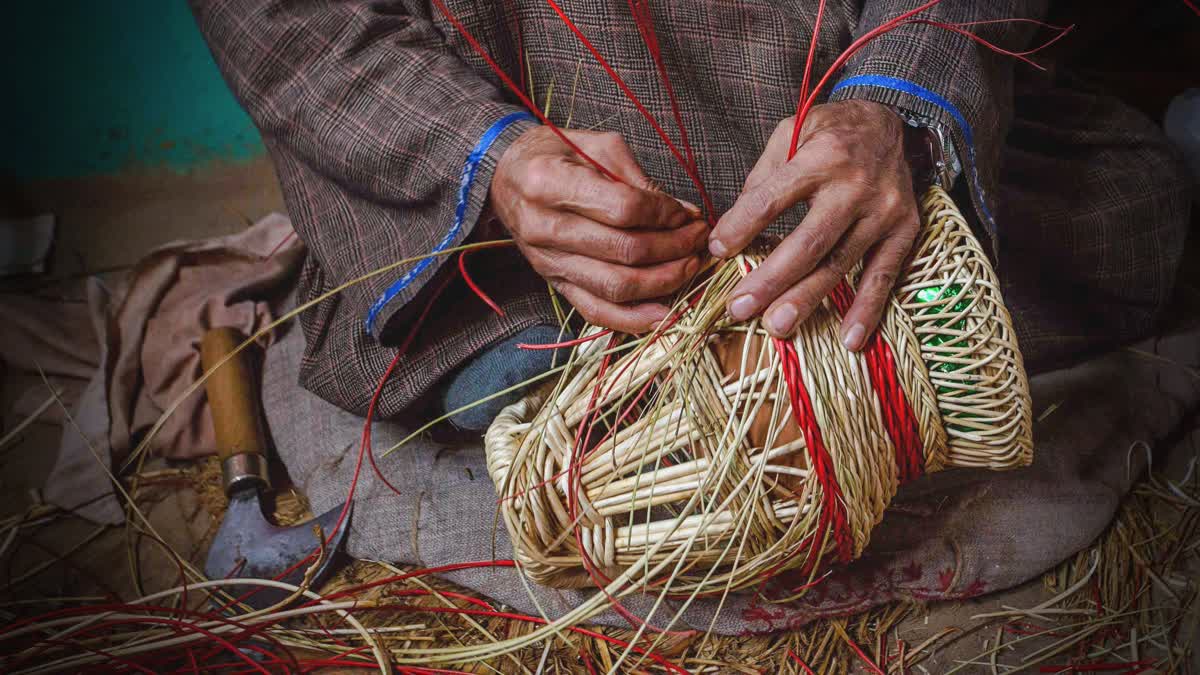
As winter approaches in the Valley, the traditional craft of Kangri-making is in full swing in Kulgam district, particularly in the villages of Souch, Hatipora and Okay. The craft continues to preserve Kashmir’s cultural heritage while providing a source of income to artisan families.
The Kangri, an earthen fire pot encased in a woven wicker basket and filled with embers, has long been an essential companion for Kashmiris during the cold months. Beyond its practical use, it is regarded as a symbol of the region’s culture and craftsmanship, and its making has been handed down through generations. For many households in the Valley, the sight of a Kangri tucked beneath a pheran is as much a part of winter as the first snowfall.
A Seasonal Source of Livelihood
With the onset of colder weather, demand for Kangris rises, and artisans in the three villages have stepped up production. The craft offers seasonal livelihoods to families involved at different stages of the process, from making the Kangris to decorating them.
Each Kangri passes through the hands of skilled workers. The wicker casing is carefully woven around the earthen pot, and many pieces are then given decorative finishing that adds to their appeal. The work is largely carried out within households, allowing family members to contribute and ensuring that the skills remain within the community. In villages where the craft is widely practised, the rhythm of daily life during the pre-winter months revolves around it.Official Figures Underline the Scale
Assistant Director Handicrafts Kulgam, Sheikh Humayun Javid, said that 14,300 artisans are registered in the district, of whom 7,080 are engaged in Kangri-making. The figures indicate that a little under half of the district’s registered artisans are associated with this single craft, underscoring its importance to the local handicrafts sector.
The number of registered artisans also reflects the broader role of handicrafts in the district’s economy. For many families, craft work provides a steady supplementary income, and in several households it is the principal means of support. The scale of participation shows how a traditional occupation can sustain a large section of the rural population.
Heritage and Identity
Kashmir’s handicrafts are known across the country and beyond, and the Kangri holds a distinctive place among them. Unlike many crafts that have moved toward decorative or export markets, the Kangri remains a functional item deeply woven into everyday winter life, and it continues to be used in homes across the Valley.
Preserving the craft therefore carries cultural significance as well as economic value. Each season that artisans continue their work helps keep alive techniques and designs that might otherwise fade, and passes them on to younger members of the community. The decorative element of the craft, in particular, reflects the creativity of local artisans, who take pride in the finish of each piece.
Sustaining the Craft
Craft practitioners and observers often point to several needs in sustaining traditional crafts: regular access to raw materials, fair returns for artisans, and wider markets for finished products. Registration of artisans, as is done in the district, is generally seen as a step that helps identify practitioners and connect them with support available through the handicrafts sector.
Encouraging younger people to take up the craft is also considered important. When the work provides a dependable income, it is more likely to hold the interest of the next generation and ensure that the tradition continues. Training, awareness and promotion of the product are among the measures that are commonly suggested to strengthen such crafts.
Warmth, Tradition and Work
As temperatures drop in the coming weeks, the demand for Kangris is expected to remain strong, keeping artisans in Souch, Hatipora and Okay busy. Their work is a reminder that heritage can be sustained when it also sustains livelihoods.
In Kulgam, the making of the Kangri is more than a seasonal activity. It connects families to a long tradition, supports thousands of artisans and helps carry a distinctive part of Kashmir’s identity into another winter. As the cold sets in, the glow of the Kangri will once again warm homes across the Valley, and behind each one will be the skill of an artisan from Kulgam.
