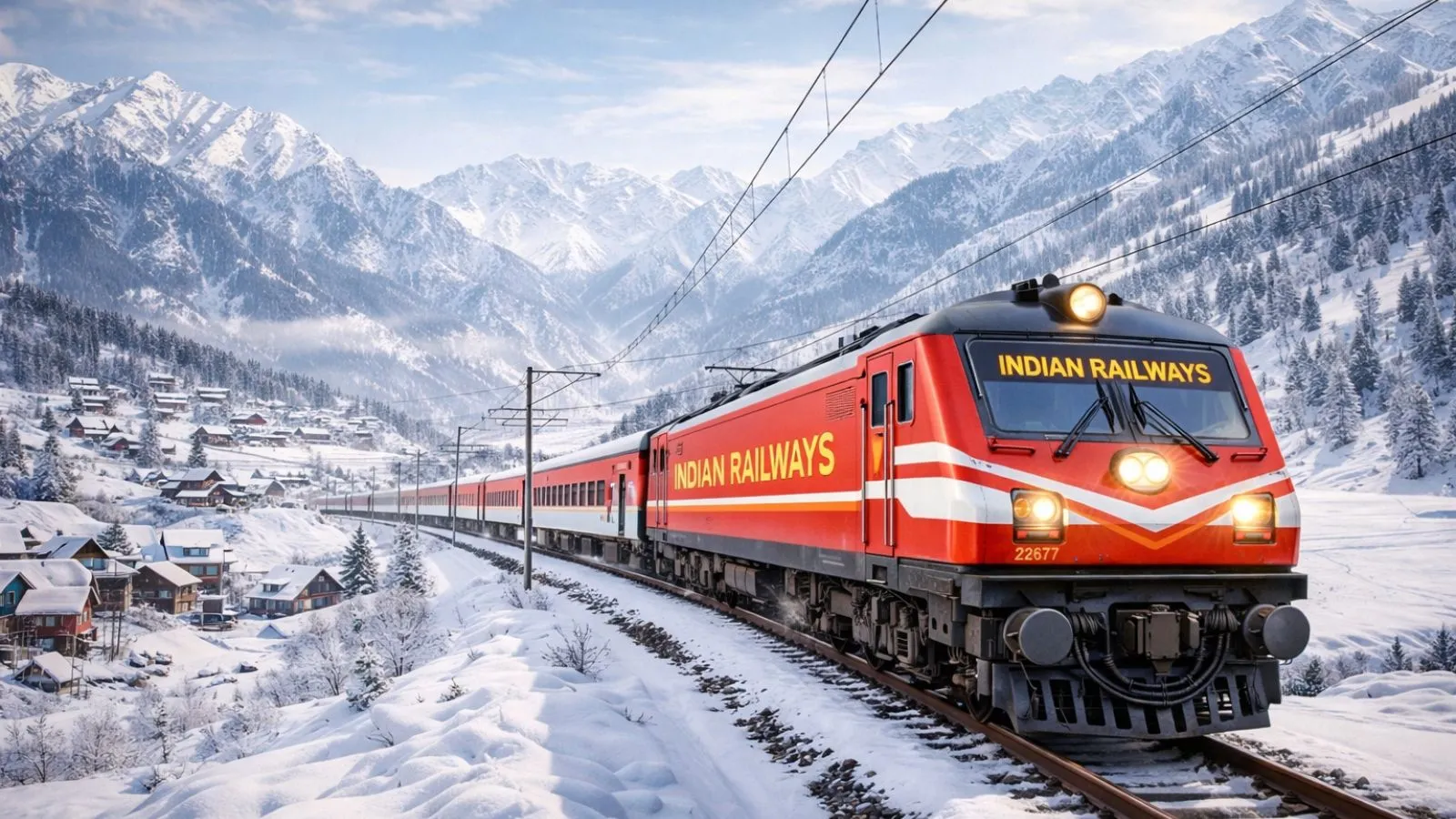
For years, the journey to Vaishno Devi has had an awkward final stretch. Pilgrims would reach Jammu Tawi, tired from a long train ride, and then hunt for a taxi or bus to cover the remaining distance to Katra. From October 18, that last stretch gets easier.
The Sabarmati-Jammu Tawi Express is being extended to Shri Mata Vaishno Devi Katra, with three new halts at Samba, Bari Brahmana and Martyr Captain Tushar Mahajan station. It is a modest-sounding timetable change with wide benefits for pilgrims, passengers, local trade and regional connectivity.
A direct ride to the base camp
Katra is the starting point of the yatra to the Vaishno Devi shrine, visited by lakhs of devotees every year. For travellers from Gujarat and the states along this route, a train that goes all the way to Katra means fewer transfers, less luggage handling and a calmer start to the pilgrimage.
The gains are greatest for those who feel the strain most: elderly parents, families with young children and first-time visitors unsure of the road. Energy saved on the way is energy available for the climb.Three new halts, three communities
Samba gains a stronger rail link. Students, daily commuters and families can reach Jammu, Katra and the wider network more easily, which can shape choices about education, jobs and healthcare.
Bari Brahmana, known for its industrial and commercial activity, benefits too. Easier movement for workers, suppliers and customers supports local enterprise.
Martyr Captain Tushar Mahajan station carries the name of a soldier who gave his life in service. Each time a train halts there, passengers from distant cities encounter that name, a quiet way for a nation to remember.
Good for local trade
When pilgrims arrive smoothly, many livelihoods benefit: hoteliers, homestay owners, taxi and pony operators, shopkeepers, food vendors, porters and artisans selling shawls, dry fruits and souvenirs.
Dependable rail access can also help spread visitor numbers more evenly across the year, rather than leaving incomes tied to a few peak weeks. For small traders along the route, a train stop can mean new customers, quicker supplies and a wider market.
Connectivity that serves everyday life
Rail in Jammu & Kashmir is about more than tourism. It is a student reaching a college, a patient reaching a larger hospital, a family reuniting for a festival, a farmer or craftsperson reaching a bigger market.
Every extension and new halt ties the region more closely to the national network. Distance matters less, and travel becomes more affordable and predictable.
Cleaner and more economical
Trains are among the most economical and energy-efficient ways to move large numbers of people. Each pilgrim who shifts from road to rail eases pressure on busy highways and trims travel emissions. For families who save for years to make this journey, lower costs matter too.
Before you travel
Check the latest timetable, halt timings and seat availability on official Indian Railways platforms such as the IRCTC website or the NTES app. Book early, especially around festivals and peak pilgrimage months.
The bigger picture
Infrastructure is often measured in kilometres, stations and schedules. Its real measure is people: the grandmother who completes her long-awaited darshan with less strain, the shopkeeper in Bari Brahmana welcoming new customers, the student in Samba catching an early train.
This extension is a welcome step towards a more connected, accessible and prosperous Jammu & Kashmir. For many travellers, the road to the divine has just become shorter.
